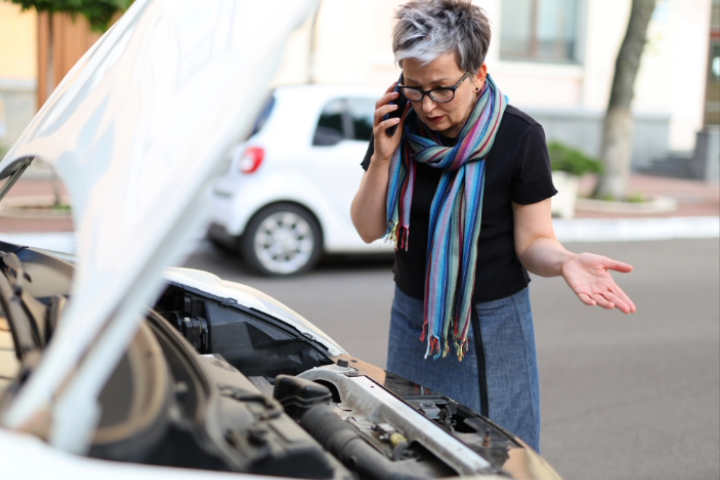
You’re on the motorway, music on, miles to go, then the engine splutters. A warning light flashes and the car slows. It’s a moment every driver dreads, but it happens every day. The good news? Knowing what to do can turn a stressful situation into a manageable one.
In many cases, the problem builds up over time, with things like a weak battery, overheating engine or low tyre pressure eventually causing a breakdown. It’s why breakdowns can feel unexpected, even when there were subtle warning signs all along.
In this guide, we walk you through what to do from the moment something goes wrong to getting back on the road, and how the right breakdown cover can make all the difference.

Safety comes first, always
Before anything else, your safety, and the safety of your passengers, is the only priority. Don’t try to diagnose the problem while still moving. React calmly and deliberately.
1. Signal early and slow down gradually
Put your hazard lights on immediately. If you’re on a motorway, move to the left lane, then onto the hard shoulder as soon as it’s safe.
2. Pull over as far left as possible
Get clear of live traffic lanes. On a smart motorway without a hard shoulder, use the nearest Emergency Refuge Area (ERA).
3. Get passengers out on the left side
Exit away from traffic. Get everyone, including pets, behind the barrier or as far from the road as possible.
4. Leave hazard lights running
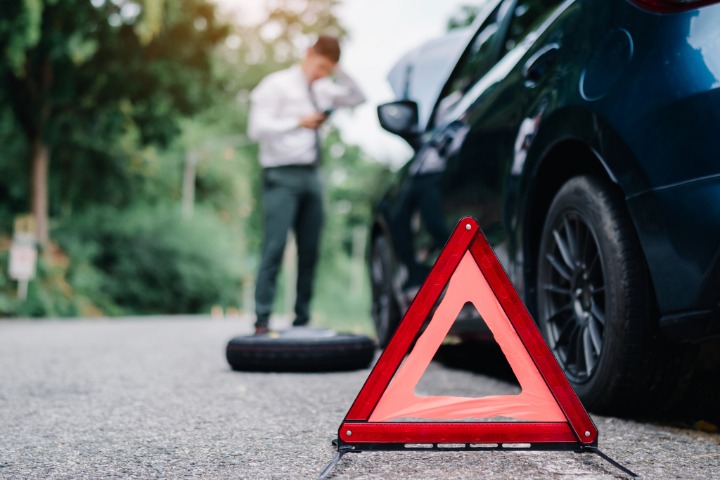
Don’t turn them off. Place a red warning triangle at least 45 metres behind the car on a non-motorway road, as per the UK Highway Code. Warning triangles must not be used on motorways.
5. Do not stand behind or beside the car
Move to safety and call for help from a safe distance, never linger near passing traffic.
On smart motorways, the hard shoulder is often an active lane. If you cannot reach an Emergency Refuge Area (ERA), stay in your vehicle with your seatbelt on, switch on hazard lights, and call 999 immediately. National Highways patrols monitor all motorway cameras 24/7.
What to check before help arrives
Once everyone is safe, take a breath and assess what you can observe without putting yourself in danger. You don’t need to be a mechanic, you just need to gather enough information to relay to your breakdown provider.
- Note any warning lights that were showing before you stopped
- Listen for any unusual sounds: knocking, hissing, or grinding
- Look for visible signs: smoke, steam, or fluid on the ground
- Check your location: road name, motorway junction, or nearby landmark
- Note the time and how long the problem has been occurring
Do not attempt to open the bonnet if steam is visible, and never try to repair an electrical fault roadside unless you are trained to do so. A surprising number of breakdowns trace back to issues that a routine service would have caught, something worth keeping in mind for the upkeep of your vehicle going forward.
Who do you call when things go wrong?
Your first call should always be to your breakdown provider; not a local garage, and not a friend with a tow rope. A qualified breakdown service will respond faster, have the right equipment, and know the legal requirements for moving your vehicle safely.
Have the following ready when you call:
- Your breakdown membership or policy number
- Your exact location
- Your vehicle registration, make, and model
- A brief description of the problem and any warning lights
- How many people are with you
Your provider will give you an estimated arrival time and advise on whether to stay in the vehicle or wait at a distance. Most reputable providers aim to reach you within 30–60 minutes.
What to do while you’re waiting for help
The wait can feel like an eternity, especially in bad weather or on a busy road. Here’s how to stay safe and comfortable until help arrives.
1. Stay in the car if on a motorway
Statistically, you are safer inside the vehicle (seatbelt on) than standing at the roadside on a motorway.
2. Keep the doors locked
Unfortunately, roadside scammers do exist. Only open the door to a marked recovery vehicle with identification.
3. Keep hazards on and stay visible
Visibility saves lives. Keep hazard lights running for the entire duration of your wait.
4. Conserve your phone battery
Switch to low power mode after making your call. You may need to communicate further with the recovery team.
5. Stay warm and hydrated
An emergency kit with a foil blanket, water, and a torch in your boot can make a real difference in winter months.
What breakdown cover actually does for you
Many drivers assume their standard car insurance includes breakdown cover, it usually doesn’t. Breakdown cover is a separate product, and without it, a single callout can be costly and potentially set you back a significant amount in the UK. Here’s what breakdown insurance usually covers:
- Roadside assistance: A trained technician comes to you and attempts a fix at the scene.
- Vehicle recovery: If the car can’t be fixed roadside, it’s towed to a garage of your choice.
- Home start: Cover that kicks in even if you break down on your own driveway.
- Onward travel: Alternative transport or accommodation if your car can’t be repaired same-day.
- 24/7 helpline: Round-the-clock support so you’re never stuck without someone to call.
The peace of mind alone is worth it, but when you factor in the average cost of an unplanned tow across the UK, a breakdown policy pays for itself many times over the first time you need it.
Being prepared changes everything
A breakdown is stressful, but it doesn’t have to be dangerous, expensive, or chaotic. The drivers who handle it best are the ones who pulled over safely, stayed calm, and had a number to call. The ones who struggle are the ones who didn’t think it would happen to them.
Being insured means having a qualified technician on the way within the hour, not scrambling to find a garage at 11pm on a Sunday. It means your family gets home safely. It means you’re not paying hundreds out of pocket for a tow you didn’t plan for.
Don’t wait until you’re stranded to think about it. Get CoverMy Breakdown insurance today, and drive with one less thing to worry about.
Get breakdown insurance quote